Palace Solitaire - Card Games
People Lovin GamesCard
4.9244.00 Reviews
- Version
- 1.5.5.20260509
- Installs
- 1.00M
- Age Rating
- Everyone
Screenshots
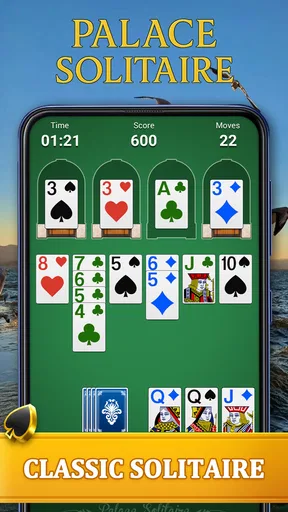
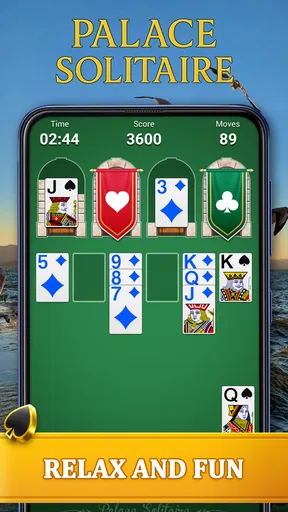
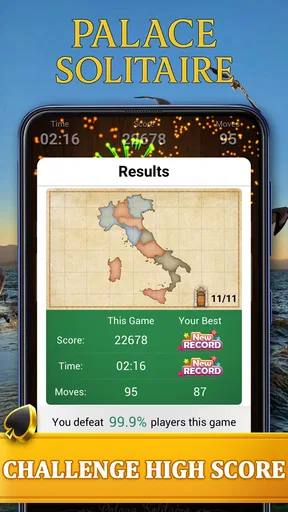
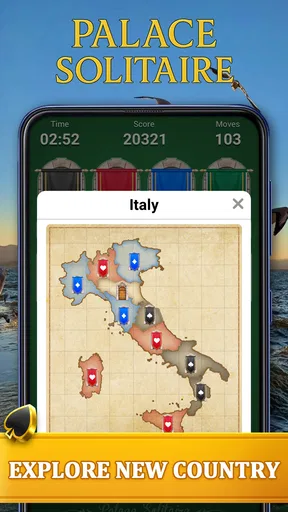
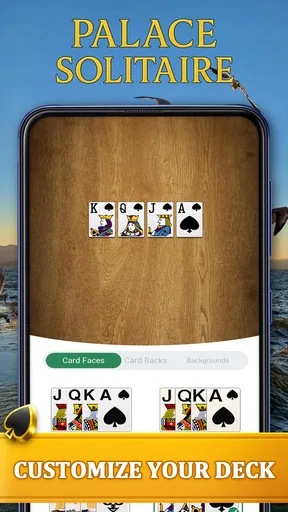
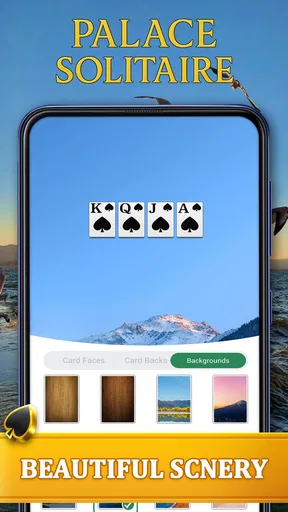
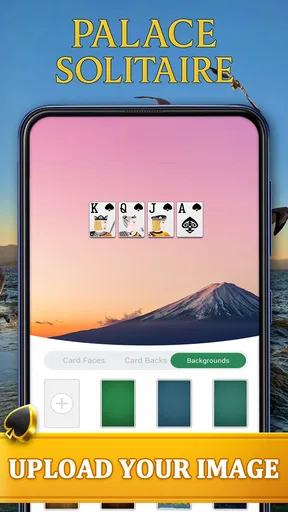
Our Review of Palace Solitaire - Card Games
 Analysis by Appyee
I spent time with Palace Solitaire as a quiet card game rather than treating it like a quick store download and move-on experience. That distinction matters because its appeal is not built around a huge amount of content or a complicated social system. The attraction is the small decisions: choosing which card to expose, protecting a useful move, and deciding when a safe-looking play may leave the layout harder to solve. If you enjoy solitaire but want each hand to feel a little more deliberate, this is an easy game to understand and surprisingly absorbing.
It comes from People Lovin Games and is available free of charge for Android users running 6.0 or later. The age classification is Everyone, which fits the simple card presentation and accessible rules. The game was released on Jul 21, 2023, and the current version is 1.5.5.20260509. Its average rating is 4.9 from around 16 thousand ratings, while the store shows 1M+ installs. Those figures suggest that it has found a substantial audience, but I still think the better question is whether its particular style of solitaire matches the way you like to play.
How the card layout turns simple rules into meaningful decisions
I find the layout most rewarding when I treat each move as a choice about what I want to learn next, not just what I can clear right now. That mindset makes even a brief hand feel purposeful, and it also helps me notice when the cards themselves—not a careless decision—have narrowed my options. Next, it is worth looking at how that deliberate pace holds up when I play for longer.
A familiar idea with a more thoughtful rhythm
Palace Solitaire: Card Games sits firmly in the card game category, but it does not feel like a disposable round of tapping cards as quickly as possible. The central experience is about managing a layout and thinking one or two moves ahead. At first, the arrangement can look manageable because the rules are easy to grasp. The challenge appears when several legal moves compete with one another and only one of them keeps the most useful cards available.
That makes the game a good fit for short breaks. I can start a hand while waiting for an appointment, make a few careful moves, and stop without needing to remember a long story or complicated objective. It also works when I want something more engaging than an automatic card shuffle. The game asks for attention, but not the kind of concentration required by a strategy game with a large map or a long campaign.
The most useful habit is to avoid playing the first available move simply because it is available. I look at the exposed cards, check which move will uncover another card, and then consider whether that new card actually improves my options. This small pause changes the experience. A move that opens a card may be less valuable than one that preserves a sequence or keeps a flexible card available for later.
Why the early moves deserve more care than they seem to
Many solitaire players develop an instinct to clear whatever is easiest. Here, that instinct can create trouble. I found it more helpful to treat the opening as a planning phase. Before committing, I scan for cards that are blocking deeper parts of the layout and identify moves that could produce several follow-up choices. The aim is not always to make the biggest visible progress; it is to keep the board from becoming narrow.
A practical technique is to separate “progress” from “freedom.” Progress means removing or relocating a card. Freedom means leaving yourself several possible next moves. When those goals conflict, I usually favor freedom early in a hand. This is one of the less obvious lessons in the game: a slower-looking turn can be stronger if it prevents the next few turns from becoming forced.
Another useful approach is to delay a convenient move when it would consume a card that could serve more than one purpose. If a card can help in two different sequences, I avoid spending it until the layout tells me which route is more important. That does not guarantee a win, but it reduces the number of hands lost through an avoidable early commitment.
Progress feels personal, but it is not always a clean measure of skill
Solitaire naturally mixes decision-making with the order in which cards appear. Palace Solitaire is enjoyable when I accept that balance instead of expecting perfect control. A thoughtful player can improve the odds of a successful hand by preserving options, yet a good plan can still meet an awkward layout. That is not a flaw unique to this game; it is part of why solitaire remains relaxing for many people.
The pressure is gentle rather than aggressive. I do not feel pushed into rapid taps, and the game is better when played at a measured pace. If you enjoy card games because they let you think privately, this works well. If you prefer a constant stream of rewards, visible missions, or a strong sense of leveling up, the experience may seem too restrained.
For an everyday example, I would use it during a train ride when I have ten minutes but do not want to begin a game that demands a full session. I can play one hand, stop after a difficult position, and return later without feeling that I have abandoned a larger objective. That makes it more practical than many competitive card games, which often punish interruptions or require an online opponent to remain available.
Where the free model affects the decision to install
The game is free to download, which removes the main barrier for someone who simply wants to test its style. I appreciate that because solitaire is personal: one player may enjoy careful layout management while another may find it repetitive after a few rounds. A free starting point lets you make that judgment through actual play rather than relying on a description.
When spending is the concern, I would approach the game with a simple rule: install it for the card experience, not because you expect a particular purchase structure. The public facts establish that the game is free, but they do not give me a confirmed purchase breakdown to present as fact. I therefore would not promise that every element is permanently free, nor would I claim that paid advantages, subscriptions, or advertising determine the experience. Those details should be checked directly on the current device listing and inside the game before making any payment.
That uncertainty does not make the download unreasonable, but it does affect my trust verdict. I am comfortable trying a free solitaire game when I can decide for myself whether the basic loop is worthwhile. I would be more cautious about spending until I had personally seen what a purchase unlocks, whether it changes play, and whether the benefit is cosmetic or functional. The important point is to keep the decision tied to something clearly shown at the time, rather than assuming that a free label explains the entire business model.
Does progress create pressure?
My experience with this type of game is that pressure comes mainly from the player’s own desire to finish a difficult layout. Palace Solitaire does not need a dramatic story to create that feeling. A nearly solved hand can make one mistake feel significant, especially when the mistake came from choosing a short-term move too quickly. I like that tension in small doses, although it may frustrate anyone who wants every round to be immediately forgiving.
The best way to keep the game relaxing is to treat unsuccessful hands as information. I ask which decision reduced my options: Did I uncover the wrong card first? Did I use a flexible card too early? Did I focus on clearing one area while leaving another blocked? This turns a loss into a review of choices rather than a reason to chase the next hand impatiently.
Players who are sensitive to streaks should also set a stopping point. Solitaire can encourage “one more attempt,” particularly after a hand fails near the end. Because the game is free, the temptation may be less about entry cost and more about time. I would stop after a few frustrating rounds, especially if I notice that I am tapping quickly instead of thinking. The game is at its best when it remains a calm puzzle, not a test of endurance.
Fairness when there is no opponent across the table
Competitive fairness looks different in a solo card game. There is no opponent making a move against me, so the main fairness question is whether the layout gives a reasonable space for decision-making rather than whether another player has an advantage. I judge the experience by how much my choices matter and whether I can understand why a hand became difficult.
Palace Solitaire works for players who want private competition with their own judgment. I can compare a careful attempt with a rushed one and see how preserving options changes the result. That is a healthier form of competition for some people because it avoids the frustration of matchmaking, uneven experience levels, or a rival who knows a particular deck better than I do.
At the same time, a solo game cannot offer the same kind of fairness proof as a head-to-head card title. There is no direct opponent whose play demonstrates the balance of the system. The randomness of a layout also means that a result should not be read as a pure measurement of skill. For me, the right expectation is “make better decisions within the hand I receive,” not “a perfect plan will always win.”
I also would not use the high rating as evidence that every layout is equally satisfying. A 4.9 average is encouraging, and the large number of ratings gives it weight, but ratings summarize many different expectations. Some players may value the relaxing pace, while others may care more about variety or progression. I see the rating as a reason to try it, not a substitute for deciding whether its particular solitaire rhythm suits me.
How it compares with ordinary solitaire alternatives
Compared with a basic solitaire app that exists mainly to reproduce a familiar format, this game feels more focused on the decisions inside each layout. Its strength is the compact strategic layer: I am not just clearing cards mechanically, but considering what each move leaves behind. That makes it more interesting than an entirely automatic or purely speed-based version.
Compared with a large card collection game, however, it is a quieter proposition. It is not the choice I would make if I wanted deck construction, character abilities, online battles, or a deep progression system. Those alternatives provide more variety between sessions, but they also bring more rules, more distractions, and often more pressure to keep up with other players. Palace Solitaire is better when I want the card puzzle itself to remain the center of attention.
It also differs from traditional physical solitaire in convenience rather than in social depth. A phone gives me a ready layout and makes it easy to play in spare moments, while a physical deck offers a slower tactile experience and no concern about a device screen. If you enjoy handling cards, this will not replace that feeling. If you value instant setup and the ability to pause, the mobile format is more practical.
Three small techniques that improve the experience
Count future choices, not just cleared cards. Before a move, I check whether it opens one route or several. A move that reveals a card but blocks the remaining layout may look productive while quietly reducing flexibility.
Use the first part of a hand to gather information. I avoid spending every useful card immediately. Keeping one adaptable option available helps me respond when the next exposed card changes the best route.
Review the turning point after a failed hand. Instead of restarting instantly, I identify the first move that left the layout with too few choices. This makes the next attempt more deliberate and prevents repeating the same attractive mistake.
These techniques are not magic solutions, and they do not remove the luck built into solitaire. Their value is that they make the game feel more readable. I can see the relationship between a decision and its consequences, which is much more satisfying than simply hoping the next card fixes everything.
What I would want to check before committing more time or money
The current version number, 1.5.5.20260509, is useful when checking whether my installation is up to date, particularly if the behavior on my phone differs from what I expect. I would also confirm that my device meets the Android 6.0 minimum before troubleshooting performance. That requirement is modest, but older hardware can still make any card game feel less comfortable if the screen is small or touch input is unreliable.
For purchases, I would inspect the exact wording shown in the live store and the in-game purchase screen. I would want to know whether an optional payment removes interruptions, adds presentation changes, or affects access to play. Since those details are not established here, I would not treat assumptions about them as part of the review. My practical advice is to try the free experience first, decide whether the core card loop earns regular use, and only then consider an optional purchase whose benefit is clearly explained.
I would also ask myself whether I need offline play, extensive customization, or long-term progression before installing. Those are reasonable needs, but they are different from wanting a focused solitaire session. If any of them is essential, I would compare the game directly with alternatives that advertise those features rather than expecting this title to become a different kind of card app.
Who should play it, and who should skip it?
I recommend it to someone who enjoys solitaire but wants to make more meaningful choices than simply following the first legal move. It is especially suitable for quiet breaks, casual daily play, and players who like improving through observation rather than collecting equipment or competing in real time. The Everyone rating also makes its presentation broadly approachable.
I would skip it if my main goal were multiplayer competition, elaborate deck building, or a campaign with a strong narrative. I would also look elsewhere if I dislike repeated layouts or if I find random card order too frustrating. Even a well-designed solo card game can feel narrow when the player wants constant novelty.
People who are careful about spending should not feel obliged to buy anything simply because the game is free to install. I would use the free access as a trial, read each purchase prompt closely, and judge value by how often I actually return to the core game. That approach keeps the decision grounded and avoids confusing popularity with personal value.
My trust verdict after playing
Palace Solitaire: Card Games earns my recommendation as a focused, low-commitment solitaire option. I like that its best moments come from planning rather than noise, and I appreciate how a short session can still contain a real decision. The game does not need to pretend to be a full strategy adventure; its strength is staying close to the card layout while giving each move enough consequence to matter.
My praise is measured. The experience may become repetitive for players who need a wide range of modes, and solitaire’s mixture of skill and card order will never satisfy someone looking for a fully controlled puzzle. The free label makes trying it easy, but I would inspect any purchase details personally before spending because a general free-download description is not enough to judge the complete cost structure.
For me, the final test is simple: when I have a few quiet minutes, would I choose it over scrolling or opening a more demanding game? Yes, when I want a calm card challenge with room to think. If that sounds like your kind of break, People Lovin Games’ title is worth trying. Its real strength is the balance between relaxation and careful decision-making, provided you approach it as a compact solo puzzle rather than expecting competitive features or a large progression system.
Verdict
Strengths of Palace Solitaire - Card Games
- Simple solitaire rules make it easy for beginners to start playing.
- Short rounds are convenient for quick breaks or casual sessions.
- Smooth card controls make moving and arranging cards feel intuitive.
- Multiple game options add variety beyond a single solitaire layout.
- Offline play is useful when you have no internet connection.
Limitations of Palace Solitaire - Card Games
- Ads may interrupt play, especially between completed rounds.
- Some features or layouts may require in-app purchases to unlock.
- Random deals can occasionally feel repetitive during longer sessions.
- Small card details may be harder to see on compact phone screens.
- Limited social features may disappoint players seeking competition or chat.
Other Releases by People Lovin Games
View All

Similar Picks in This Category
View All
Solitaire - Classic Card Games
MobilityWare4.6

UNO!™
Mattel163 Limited4.3

Spider Solitaire: Card Games
MobilityWare4.6

Solitaire.com - Classic Cards
Tripledot Studios Limited4.7

Plants vs. Zombies™ Heroes
ELECTRONIC ARTS4.1

Hearthstone
Blizzard Entertainment, Inc.4.1
Frequently Asked Questions
What is Palace Solitaire - Card Games, and how is it played?
Palace Solitaire - Card Games is a casual card game based on the popular Palace, also known as Shithead or Karma, where the goal is to get rid of all your cards before the other players. You play cards from your hand, then use face-up and face-down cards later in the round. The game includes simple rules, strategic decisions, and special cards that can change the pile.
Can I play Palace Solitaire offline without an internet connection?
In most situations, Palace Solitaire can be played without a constant internet connection, which makes it convenient for travel, commuting, or relaxing away from Wi-Fi. Some features may still require internet access, such as advertisements, online services, updates, leaderboards, or analytics. It is best to launch the game once while connected and check which modes remain available offline.
Is Palace Solitaire suitable for beginners who have never played this card game?
Yes, the game is generally accessible to beginners because the basic objective is easy to understand: play a card equal to or higher than the card on the discard pile and empty your cards first. New players may need a few rounds to learn the effects of special cards and the best time to use them. Tutorials, hints, or practice games can make the learning process easier.
Does Palace Solitaire include advertisements, in-app purchases, or paid features?
The availability of advertisements and optional purchases can depend on the version, device, region, and developer settings. Many free card games use advertising between rounds or offer purchases to remove ads, unlock cosmetic options, or provide extra features. Before downloading, review the app-store listing and permission details, and check the purchase settings if the game will be used by children.
What makes Palace Solitaire different from other solitaire and card games?
Unlike traditional solitaire, which is usually a solo puzzle involving arranged card columns, Palace Solitaire focuses on quickly discarding cards under changing rules. Hidden cards create uncertainty, while special cards and the order in which you play your hand can strongly affect the result. This gives the game a mix of luck, planning, and replay value rather than a purely predictable puzzle experience.
Play our best games!


